
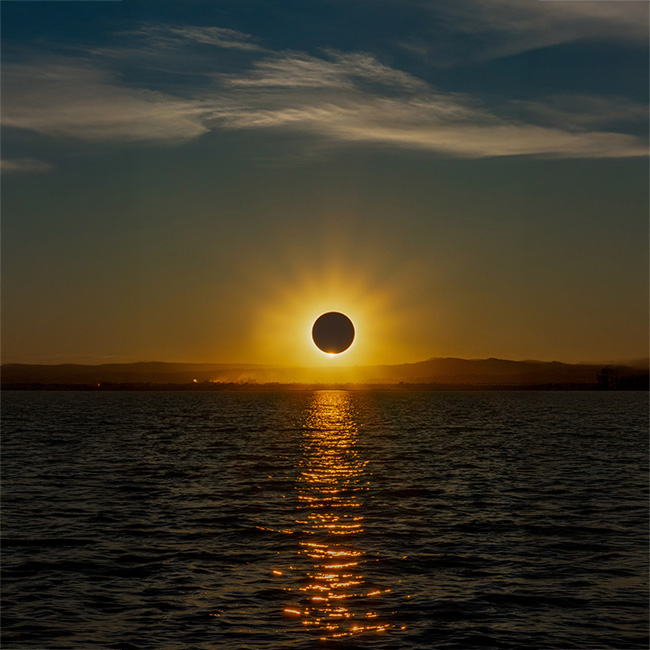
For many travelers, the perfect vacation revolves around learning about history, savoring local food, exploring beaches, or breathtaking scenery.Increasingly, however, another reason is inspiring people to pack their bags and cross continents: the sky.Known as astrotourism, this growing travel trend invites visitors to experience the wonders of the night sky.For some, that means traveling north to see the Northern Lights.
Others seek out places with exceptionally dark skies where the Milky Way shines overhead or visit observatories to learn more about the universe.Spain has long been a favorite destination for stargazers.Tenerifes Mount Teide, the countrys highest peak, is home to one of the worlds premier astronomical observatories.Thanks to its elevation, exceptionally clear skies, and minimal light pollution, visitors can view thousands of stars, constellations, and distant galaxies that are invisible from many urban areas.Quite the opposite from viewing the night sky, however, another travel trend has captured the imagination of adventure seekers: eclipse chasing.Rather than traveling to admire the night sky, eclipse chasers travel to witness one of natures most extraordinary daytime eventsa total solar eclipse.Those who have made eclipse chasing a passion even have a name: umbraphiles.
Although it sounds like an ancient word, umbraphile is actually a modern term that literally means lover of shadows.It combines the Latin umbra, meaning shadow, with the Greek -phile, meaning lover of.During the past decade, it has become the popular name for people who travel the world to stand beneath the Moons shadow during a total solar eclipse.First Solar Eclipse in More Than 120 Years Coming to SpainSpain is enjoying an extraordinary moment in astronomical history.On August 12, 2026, the country will experience its first total solar eclipse since August 30, 1905, drawing visitors from around the world.If the timing is too soon to plan your own eclipse adventure, there is good news.
Another total solar eclipse will cross Spain on August 2, 2027, giving travelers nearly a full year to plan a once-in-a-lifetime journey.Why Travel for Just a Few Minutes?If youve never experienced a total solar eclipse, you may wonder why anyone would travel hundreds or even thousands of miles for an event lasting only a few minutes.The answer surprises many first-time observers.One of the biggest misconceptions is that you cannot look directly at a solar eclipse.In reality, during the brief period known as totality, when the Moon completely covers the Sun, it is safe to remove certified eclipse glasses and view the eclipse with the naked eye.Before and after totality, however, proper eye protection is essential because even a thin crescent of the Sun can permanently damage your vision.Those precious minutes reveal sights that cannot be seen at any other time.
The Suns shimmering coronaits outer atmosphereappears as a glowing halo around the darkened Moon.Bright stars and planets emerge in the daytime sky.Temperatures may suddenly cool, birds stop singing, insects begin their evening chorus, and the horizon glows with an eerie 360-degree twilight.Many people who have witnessed a total eclipse describe it as one of the most moving experiences of their lives.More Than an EclipseFortunately, the eclipse is only one reason to visit Spain.The path of totality on August 12, 2027 will sweep across northern Spain from the Atlantic coast to the Mediterranean, continuing over the Balearic Islands.
Cities including A Corua, Bilbao, Zaragoza, Valencia, and Palma will experience totality, while Madrid and Barcelona will lie just outside the path.Along its route are regions celebrated for dramatic Atlantic coastlines, medieval cities, mountain landscapes, renowned seafood, vineyards, pilgrimage routes, and charming villages.Whether you plan your visit around the 2027 eclipse or simply want to discover a different side of Spain, these destinations offer memorable experiences long after the Moons shadow has passed.Among the many destinations along the eclipses path, these three regions showcase some of northern Spains most memorable scenery, culture, and visitor experiences.Galicia: Spains Green NorthwestWith its rugged Atlantic coastline, emerald-green landscapes, historic villages, and world-renowned seafood, Galicia offers a side of Spain many international visitors have yet to discover.The region is perhaps best known as the final destination of the Camino de Santiago, the centuries-old pilgrimage ending at the magnificent Cathedral of Santiago de Compostela.Yet Galicias appeal extends far beyond the famous pilgrimage route.Visitors discover dramatic cliffs, peaceful estuaries known as ras, Celtic traditions, picturesque fishing villages, and a cuisine built around some of the freshest seafood in Europe.Galicias dramatic coastline also makes it an ideal setting for viewing the 2027 eclipse.
Much of the region lies within or near the path of totality, and its Atlantic coastline provides wide-open horizons for observing the sky.Whether you come for the eclipse in Galicia, or return another time to explore its natural beauty and rich cultural heritage, Galicia rewards travelers who enjoy slowing down and discovering places that remain refreshingly authentic.Cantabria: Small Region, Endless VarietyAlthough one of Spains smallest autonomous communities, Cantabria is known for offering remarkable variety within a relatively compact area.Travelers can spend the morning exploring dramatic Atlantic beaches before heading inland to lush green valleys and the spectacular Picos de Europa National Park.Along the coast, the UNESCO Global Geopark Costa Quebrada showcases millions of years of geological history through towering cliffs, unique rock formations, and sweeping ocean vistas.Cantabria has gone a step further than simply encouraging eclipse visitors.
The regions tourism department has identified five official viewing areas chosen for their wide-open horizons, scenic settings, and excellent viewing conditions.Along the Costa Quebrada UNESCO Global Geopark, visitors can watch the eclipse from a spectacular 14-kilometer stretch of coastline between Cabo Mayor Lighthouse in Santander and the beaches of Valdearenas and Canallave, where dramatic rock formations reveal millions of years of Earths geological history.Nearby Suances offers another exceptional vantage point, with cliffs overlooking the Atlantic Ocean and views toward Picos de Europa National Park.At Bareyo, the area surrounding the colorful Ajo Lighthouse features exceptionally low light pollution and sweeping coastal views.Pea Cabarga, one of Cantabrias iconic summits, overlooks nearly 80 percent of the region, including much of the coastline around Santander.
Farther south, Valderredible is among Cantabrias darkest locations.Home to the Government of Cantabrias Astronomical Observatory, the area offers exceptionally clear skies and has been specially prepared to welcome eclipse visitors, even though the observatory itself will be reserved for scientific research on eclipse day.Even after the eclipse has passed, visitors will find plenty of reasons to lingerfrom hiking scenic mountain trails and exploring charming seaside towns to enjoying fresh seafood in Santander or following one of the regions historic pilgrimage routes.Visitors can find maps, viewing guidance, and travel information on the Cantabria Tourism website.Castile and Len: Big Skies, Historic CitiesSpains largest autonomous community, Castile and Len, is a land of medieval cities, Roman heritage, celebrated wineries, and seemingly endless open landscapes.Its broad horizons make it especially well-suited for eclipse viewing, and tourism officials have identified dozens of recommended observation sites throughout the region.Rather than focusing on a single destination, travelers can choose from historic cities, wine country, castles, and quiet rural communities, all offering excellent opportunities to experience totality.While planning your visit, consider spending time in some of the regions cultural treasures.
The Gothic cathedrals of Burgos and Len, the Roman history of Astorga, the elegant plazas of Salamanca, and the fairy-tale skyline of Segovia each tell a different chapter of Spains story.Wine lovers will also find themselves close to several renowned wine-producing areas, including Ribera del Duero and Rueda.Whether your interests include history, architecture, cuisine, or simply enjoying Spains wide-open countryside, Castile and Len offers far more than a front-row seat for an eclipse.Planning Your Eclipse JourneyRegional tourism offices have created dedicated eclipse websites featuring official viewing locations, interactive maps, visitor information, and eye safety recommendations.These resources can help travelers choose destinations that combine excellent eclipse viewing with the attractions they most want to experience during their stay.Travelers planning to experience the 2027 eclipse should reserve accommodations well in advance, as hotels along the path of totality are expected to fill quickly.Travelers looking for official eclipse information can visit Spains Trio of Eclipses website, launched by the Government of Spain through the Ministry of Science, Innovation and Universities in collaboration with the Spanish Foundation for Science and Technology (FECYT).
The site serves as the governments official resource for Spains three upcoming total solar eclipses.Even if your visit falls outside eclipse season, the same regions offer outstanding opportunities for hiking, cycling, cultural sightseeing, culinary adventures, and some of Spains most spectacular coastal and mountain scenery.More Than a Moment in the ShadowA total solar eclipse may last only a few unforgettable minutes, but the journey surrounding it can become the trip of a lifetime.Spain offers visitors an irresistible combination of dramatic landscapes, welcoming communities, exceptional cuisine, centuries of history, and experiences that reward curiosity long after the Moons shadow has passed overhead.Whether youre an experienced umbraphile planning your next eclipse adventure or simply looking for an unforgettable destination, Spain invites you to look up in wonderand then look around.From dramatic coastlines and medieval cities to unforgettable cuisine and centuries of history, youll discover that the eclipse is only the beginning of the journey.
Disclaimer: This story is auto-aggregated by a computer program and has not been created or edited by Senior Savings Deals.
Publisher: Healthy Aging ( Read More )
Publisher: Healthy Aging ( Read More )