
Fall travel often brings to mind a weekend in New England, a drive through the Smokies, or perhaps a visit to California wine country.But why not expand your horizons quite literally and consider a fall trip that combines wine tasting with history, regional food, spectacular landscapes, and the experience of discovering a different part of Spain?Consider Castilla y LenCastilla y Len is an autonomous community in northwestern Spain, bordered by Portugal to the west and surrounded in part by mountain ranges.It is a large, landlocked region crossed by the Duero River, which continues west through Portugal, where it becomes known as the Douro before reaching the Atlantic.More than 155 miles of the river flow through Castilla y Len.The famous Camino de Santiago also crosses the region, while historic cities, rural villages, castles, monasteries, and wide-open countryside add plenty to see between wine stops.And there is wine lots of it.For travelers who want to combine wine with food, culture, and outdoor exploration, three routes offer very different ways to experience Castilla y Len.Three Wine Routes to Explore in Castilla y Len1.Ribera del DueroStart with one of Spains best-known wine regions: Ribera del Duero.The Ribera del Duero Wine Route follows the Duero River for about 70 miles through the provinces of Burgos, Segovia, Soria, and Valladolid.
Rolling terrain and fertile valleys provide a backdrop where wine, history, and nature come together.The region is particularly associated with Tempranillo, the grape behind many of its celebrated red wines.But dont spend the entire visit with a glass in your hand.Explore by car, bicycle, or on foot.Stop to see castles, Romanesque architecture, and the traditional underground wine cellars that are part of the regions winemaking history.Then make time for the food.An asador, a restaurant specializing in meats slowly roasted in a wood-burning oven, offers a taste of traditional Castilian cooking.
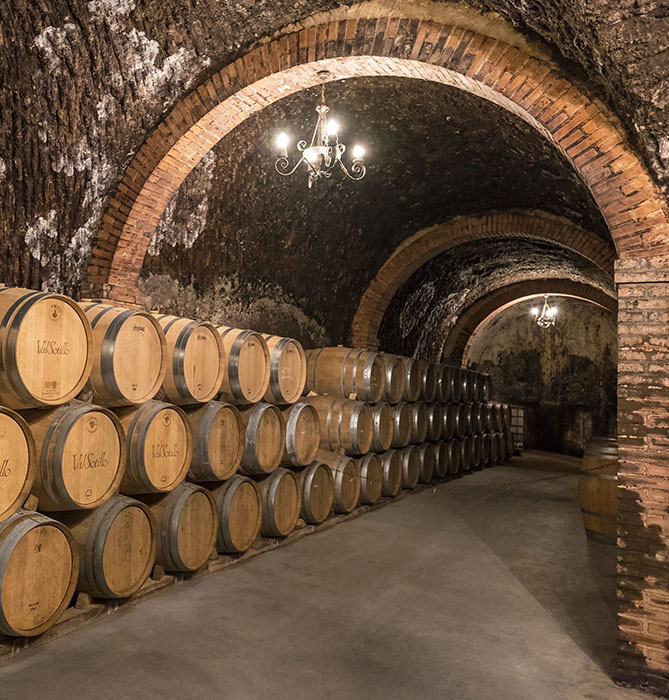
Regional specialties also include chorizo, mushrooms, and morcilla, Spains version of blood sausage.Make a Stop in PeafielOne particularly interesting stop is Peafiel, where a long, narrow castle rises dramatically above the town.Peafiel Castle is home to the Provincial Wine Museum, making it an appropriate stop on a wine-country itinerary.Down below, the historic Plaza del Coso offers another glimpse into the towns past.Then head beneath the castle hill literally for a very different look at wine history.Step Inside Bodegas ProtosBodegas Protos, one of Ribera del Dueros historic wineries, combines old underground wine galleries with striking contemporary architecture.Its aging cellars extend for about two kilometers through galleries beneath the hill crowned by Peafiel Castle.Above ground is a modern winery designed by British architect Richard Rogers in collaboration with Alonso Balaguer Arquitectos Asociados.The contrast is part of the attraction: centuries-old methods and underground cellars on one side of the experience; modern winemaking and architecture on the other.Visitors can tour the winery, but plan ahead.
Reservations are required.2.BierzoNext, head toward Bierzo, in the province of Len, for a wine region with a different personality.Bierzo sits between continental and Atlantic climatic influences, creating a microclimate well suited to grape growing.Menca is the signature red grape here, while Godello plays an important role in the regions white wines.But again, the appeal goes well beyond wine.The Camino de Santiago crosses Bierzo, threading centuries of pilgrimage history through its towns, villages, and vineyards.
Along the route are places such as Ponferrada, Molinaseca, Cacabelos, and Villafranca del Bierzo.Hiking and cycling routes wind through Menca and Godello vineyards and surrounding forests.Ponferrada brings medieval history into the trip with its Templar castle, while Molinaseca welcomes Camino travelers across its historic Pilgrims Bridge.Then there is Las Mdulas, where an ancient Roman gold-mining operation dramatically reshaped the landscape.This is the kind of wine country where it makes sense to park the car for a while, walk through a village or vineyard, and let history become part of the tasting experience.3.ArribesFor the third route, the scenery changes again.The Arribes Wine Route runs through the Arribes del Duero Natural Park in western Zamora and Salamanca provinces, near the Portuguese border.Here, the Duero becomes much more than a river running through wine country.
It cuts deeply into the landscape, forming dramatic canyons and creating a natural border with Portugal.Some canyon walls and cliffs rise more than 650 feet.Vineyards share the countryside with almond trees, junipers, holm oaks, and cork oaks.Walking trails and viewpoints offer plenty of reasons to get out of the car and take in the landscape before returning to the wine.The wines are distinctive, too.
Grapes grown in the area include Juan Garca, Rufete, Tempranillo, Menca, Brual, Verdejo, and Malvasa Castellana, with Juan Garca particularly associated with Arribes.Of the three routes, Arribes may have the broadest appeal for travelers who enjoy nature as much as wine.The river, steep canyon walls, vineyards, and proximity to Portugal become as memorable as what is poured into the glass.Another Winery Worth a StopNot every worthwhile wine stop has to be grand in scale.Bodegas Alfredo Santamara, in Cubillas de Santa Marta in Valladolid province, offers a very different experience from Protoss contemporary architecture.The third-generation family winery is located in the historic part of the village and combines traditional Castilian building materialsstone, brick, adobe, and woodwith modern winemaking equipment.The property includes an underground cellar and spaces for barrel and bottle aging.The family has also turned the property into a wine-tourism destination with lodging and dining, making it possible to linger rather than taste and move on.Make Time for the FoodWine may provide the route, but food is an essential part of traveling through Castilla y Len.Two very different restaurants offer an opportunity to explore the region through the plate as well as the glass.Barro, vilaAt Barro in vila, chef Carlos Casillas has built a Michelin-starred restaurant around local products, small-scale producers, and a strong connection to the surrounding landscape.
The restaurant occupies a renovated former flour warehouse and offers views toward vilas famous city walls.Casillas cooking emphasizes local ingredients, sustainability, and the changing seasons.This is not simply a place to stop for dinner after sightseeing.The meal becomes part of the experience of understanding the region.La Botica de MatapozuelosLa Botica de Matapozuelos, in Valladolid province, is a Michelin-starred restaurant led by chef Miguel ngel de la Cruz, whose cooking is closely tied to the surrounding countryside.The restaurant occupies a restored 1876 farmhouse on the towns Plaza Mayor.
Its cooking draws on nearby products and small local producers, with the rural landscape helping shape both its traditional dishes and tasting menus.That connection to place has also earned La Botica a Michelin Green Star for sustainability.Wine is integral to the experience as well.Wines from the surrounding region receive special attention, and a tasting-menu option can be paired with a selection of wines from the area.Let the Wine Lead the WayPerhaps the best part of a wine road trip through Castilla y Len is that the wine doesnt have to be the only reason for going.One route follows the Duero past vineyards, castles, and underground cellars.Another intersects with one of the worlds most famous pilgrimage routes.
A third leads into a dramatic landscape of river canyons along the Portuguese border.In between are historic towns, local foods, contemporary restaurants, family wineries, and plenty of countryside.So this fall, rather than simply choosing a destination and making a list of sights to see, consider another approach:Choose the wine route and let it lead you to the rest of the journey.
Disclaimer: This story is auto-aggregated by a computer program and has not been created or edited by Senior Savings Deals.
Publisher: Healthy Aging ( Read More )
Publisher: Healthy Aging ( Read More )