
Most people rarely think about balanceuntil something feels different.It may begin subtly.A moment of hesitation stepping off a curb.Feeling less steady walking across uneven ground.
Reaching for a railing more often than before.These small changes can creep in gradually, especially after 50, and many people simply assume they are part of getting older.But balance is not a fixed skill.Like strength and flexibility, it can often be improved and maintained with regular movement.Health experts increasingly recommend balance-focused exercises as part of a complete fitness routine because they help support mobility, coordination, posture, and confidence in everyday life.According to the Centers for Disease Control and Prevention (CDC) physical activity guidelines for older adults, balance activities are one of the key forms of exercise recommended alongside aerobic activity and strength training.Balance Affects Everyday Life More Than People RealizeMany daily activities rely on balance without us even noticing it.Walking through a crowded parking lot.
Climbing stairs while carrying groceries.Getting in and out of a car.Traveling through airports.
Gardening.Turning quickly when someone calls your name.These movements involve coordination between muscles, joints, vision, and reaction time.Over time, changes in muscle strength, flexibility, eyesight, and activity levels can affect how stable we feel during these ordinary moments.The National Institute on Aging notes that exercises that improve balance may help older adults stay active and maintain independence longer.Confidence Matters TooBalance is not only physical.
It can affect confidence as well.After a stumble or near fall, some people become more cautious without fully realizing it.They may avoid uneven trails, skip certain activities, or become less physically active overall.Over time, less movement can contribute to weaker muscles and reduced mobility.That is one reason experts encourage adults to work on balance before problems developnot afterward.The good news is that balance exercises do not have to be intense or time-consuming to be beneficial.Simple Ways to Work on BalanceMany balance exercises can be done at home with little or no equipment.Stand on One FootA simple exercise that challenges stability and coordination.
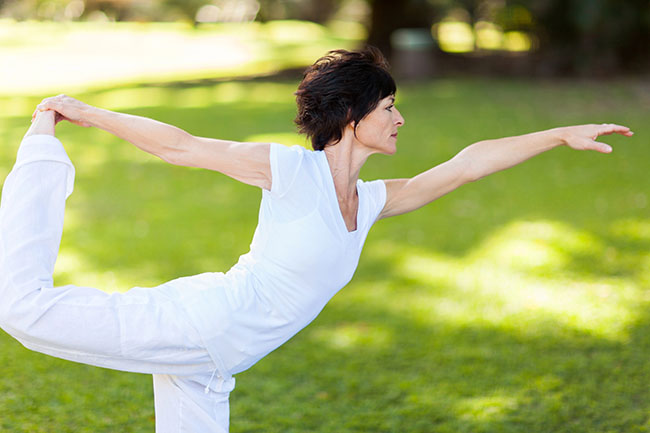
Beginners can stand near a countertop or sturdy chair for support.The classic balance test suggests 10-seconds per leg.Heel-to-Toe WalkingWalking slowly in a straight line with one foot directly in front of the other helps improve body awareness and control.Sit-to-Stand ExercisesStanding up from a chair without using your hands can help strengthen muscles important for stability and mobility.Tai Chi and YogaSlow, controlled movement practices such as tai chi and yoga may help improve balance, flexibility, and coordination.The Johns Hopkins Medicine fall prevention guide recommends gentle exercises that gradually improve stability and strength.
The guide offers video illustrations of how to perform the exercises.Walk More OftenEven regular walking can help support balanceespecially when done outdoors on different surfaces and terrain.Making Balance Part of Everyday LifeOne of the easiest ways to improve balance is to stop thinking of it as a separate workout.Simple habits throughout the day can help: Standing on one foot while brushing your teeth Taking the stairs when possible Walking on varied terrain outdoors Practicing posture while standing in line Stretching after sitting for long periodsThese small moments of movement can add up over time.The National Institute on Aging exercise recommendations encourage adults to include endurance, strength, flexibility, and balance exercises as part of an overall healthy lifestyle.Balance training may not receive the same attention as cardio workouts or strength exercises, but it plays an important role in staying active and independent at every age.Its never too late to add simple balance exercises to your daily routine and help support long-term mobility and confidence.
Disclaimer: This story is auto-aggregated by a computer program and has not been created or edited by Senior Savings Deals.
Publisher: Healthy Aging ( Read More )
Publisher: Healthy Aging ( Read More )